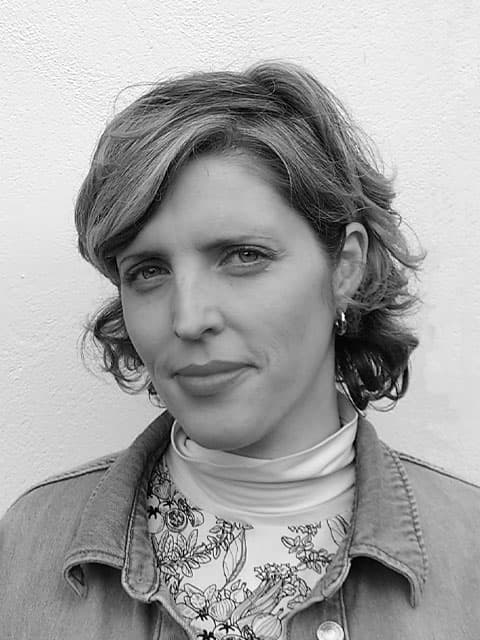
Profile
Sharon specialises in the design of critical and democratic approaches to sustainable transitions, drawing on theories from environmental humanities and resource politics. Sharon sits on the Design Museum’s Future Observatory Research Steering Group, its national research programme for the green transition delivered in partnership with the UK Arts and Humanities Research Council. She is co-lead of LUL’s Climate and Ecological Transitions research and innovation hub.
She was principal investigator on the Engineering and Physical Sciences Research Council (EPSRC)-funded Royal College of Art Ecological Citizens Network+ project (EP/W020610/1) EcoLandS that developed a tool to support communities with blue-green transitions. She led the Arts and Humanities Research Council (AHRC)-funded ‘Counter-Framing Design’ project (AH/T002875/1) investigating the politics of design framing practices in environmental movements pursuing new economic futures. The project developed a new design approach working in partnership with UK-based citizen activist groups interested in citizen-led democratic processes and social mobilisation. She was co-investigator on a HEIF-funded project to develop a citizen-centred design for policy toolkit and principal investigator on a HEIF-funded Un:Edge project which, in collaboration with Public Works and Outlandish, created a set of resources for alternative economy organisations (cooperatives, community interest companies, informal commons groups) to develop new democratic practices and structures in support of ecological and social change. In 2020, she was profiled as one of the AHRC’s Design Research ‘Future Stars’ and was invited Chair of Conversations at DRS2018.
Sharon has previously held teaching and research posts at TU Delft, The Netherlands (2015-2017), and the Royal College of Art, London (Jan-June 2016, funded project). Her past research includes the Innovate UK-funded ‘Office Chair for Life’ project and ‘Circular Makerspaces’ funded by the UK Engineering and Physical Sciences Research Council’s through the Future-Makerspaces project.
Research
Current research and collaborations
Sharon is currently working on a variety of projects on designing the green transition by developing tools, methods and practices that support local regenerative transitions. She is principal investigator on the Sensemaking Stewardship project working in collaboration with River Rights Network, Surge Cooperative, and Thames21 that is developing practices for translating blue-green stewardship practices into actionable and widely adopted approaches within relevant localities. A second strand of research is centred on a monograph related to the design history of blue-green infrastructure and its implications for green transitions today.
Current PhD / research supervisions
Sharon has supervised seven PhD students to completion on topics included transition design, design politics, design futures, ontological design, design for policy, design and aesthetics and sat on international committees for many others. She has examined PhDs nationally and internationally at various institutions. Sharon previously supervised postdoctoral researchers Dr Pandora Syperek whose work focuses on gender and ecology in museum display, and Dr Anaïs Carlton-Parada whose work focuses on epistemology, commons and ecology.
Dr Prendeville is open to expressions of interest from prospective doctoral students working on topics related to her research interests, including the political economy of sustainable design, designing the green transition, and eco-social design movements.
Interests and activities
Through her socio-ecological design expertise, Sharon has worked on a broad portfolio of impactful projects. She has presented evidence to the London Mayor’s environment committee and on ecodesign policy to the European Commission through research undertaken in collaboration with the European Network of Ecodesign Centres (ENEC). In the past, Sharon has brought Climathon2018 to Here East partnering with the London Legacy Development Corporation. Her work has been cited repeatedly in the UN’s Intergovernmental Panel on Climate Change reports (2022, 2021) and written about as a pioneering example of ‘twenty first century economics’ by thought leader Kate Raworth in her book, Doughnut Economics (Penguin, 2017), which includes initiating a platform for hosting sustainability hackathons that has led to 100s of hackathons globally.