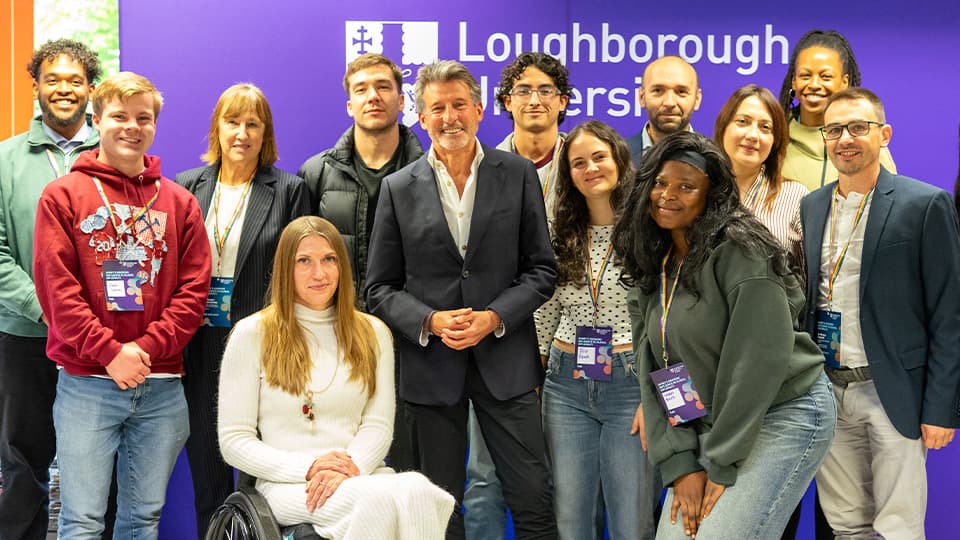
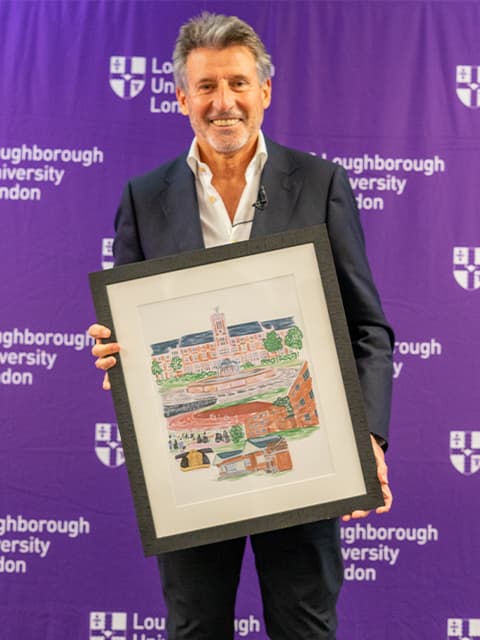
Drawing on a career spanning elite athletics, sports governance and international leadership, Lord Sebastian Coe shared his perspectives on the relationship between sport, politics and international affairs. As a four-time Olympic medallist, he won gold in the 1,500 metres at both the 1980 Moscow and 1984 Los Angeles Olympic Games before going on to lead the organising committee for the London 2012 Olympic and Paralympic Games. As a Loughborough University graduate and the University’s Chancellor, his visit also reflected the longstanding connection between the University and the Olympic legacy.
Hosted by Dr Holly Collison-Randall and Dr Helen Drake, the discussion explored the role of sport in shaping global politics, the responsibilities of sporting institutions and the increasingly complex relationship between sport and diplomacy. As a leading figure in international sport, Lord Sebastian Coe shared his perspectives on contemporary challenges facing the sector, including athlete activism, governance, integrity and the political complexities of global sport.
Dr Tim Oliver, Director of the Institute for Diplomacy and International Affairs, highlighted the significance of welcoming Lord Sebastian Coe back to the University’s home on the Queen Elizabeth Olympic Park.
We were all keen to welcome Lord Coe back to our home on the Olympic Park, a home he did so much to create. Our campus, our students, our staff and our degrees all form part of the legacy of London 2012, and of the vision Seb set out when he led the successful bid and organised the Games. Sport now sits at the heart of international relations. It shapes how countries present themselves to the world. At a time when sport governing bodies face growing scrutiny for decisions such as awarding peace prizes, few people can speak about this with more authority than Lord Coe, who has spent decades at the meeting point of sport, politics and diplomacy.
The event provided students from the Institute for Diplomacy and International Affairs and the Institute of Sport Business with the opportunity to engage directly with these issues, asking questions about the challenges and responsibilities facing athletes, sporting organisations and international governing bodies.
Dr Holly Collison-Randall, who led the panel discussion, reflected on the value of the conversation and the insights shared with students.
Hosting Lord Sebastian Coe was a great opportunity to discuss and gain insights on contemporary sport diplomacy challenges. Coe was very generous with sharing his insights on athletes' activism, governance and integrity and the political complexities of global sport. Students from the Institute for Diplomacy and International Affairs and the Institute for Sport Business asked some great questions which allowed all of us to think more deeply on sport diplomacy behaviours and practices across contexts and sporting institutions.
The visit reflects Loughborough University London’s growing focus on sport diplomacy and leadership, building on its postgraduate programmes and interdisciplinary approach to understanding the role of sport in society and international affairs. By bringing together expertise across diplomacy, international affairs and sport business, the event offered students valuable opportunities to explore how sport can influence political relationships, shape international perceptions and contribute to wider global discussions.
Watch the discussion
A recording of the panel discussion is available to watch, offering viewers the opportunity to revisit the conversation and hear Lord Sebastian Coe’s insights into the evolving relationship between sport and global diplomacy.